8bitlesson
@8bitlesson
Cambridge O Level, A Level and university courses, taught through interactive labs.
 Course
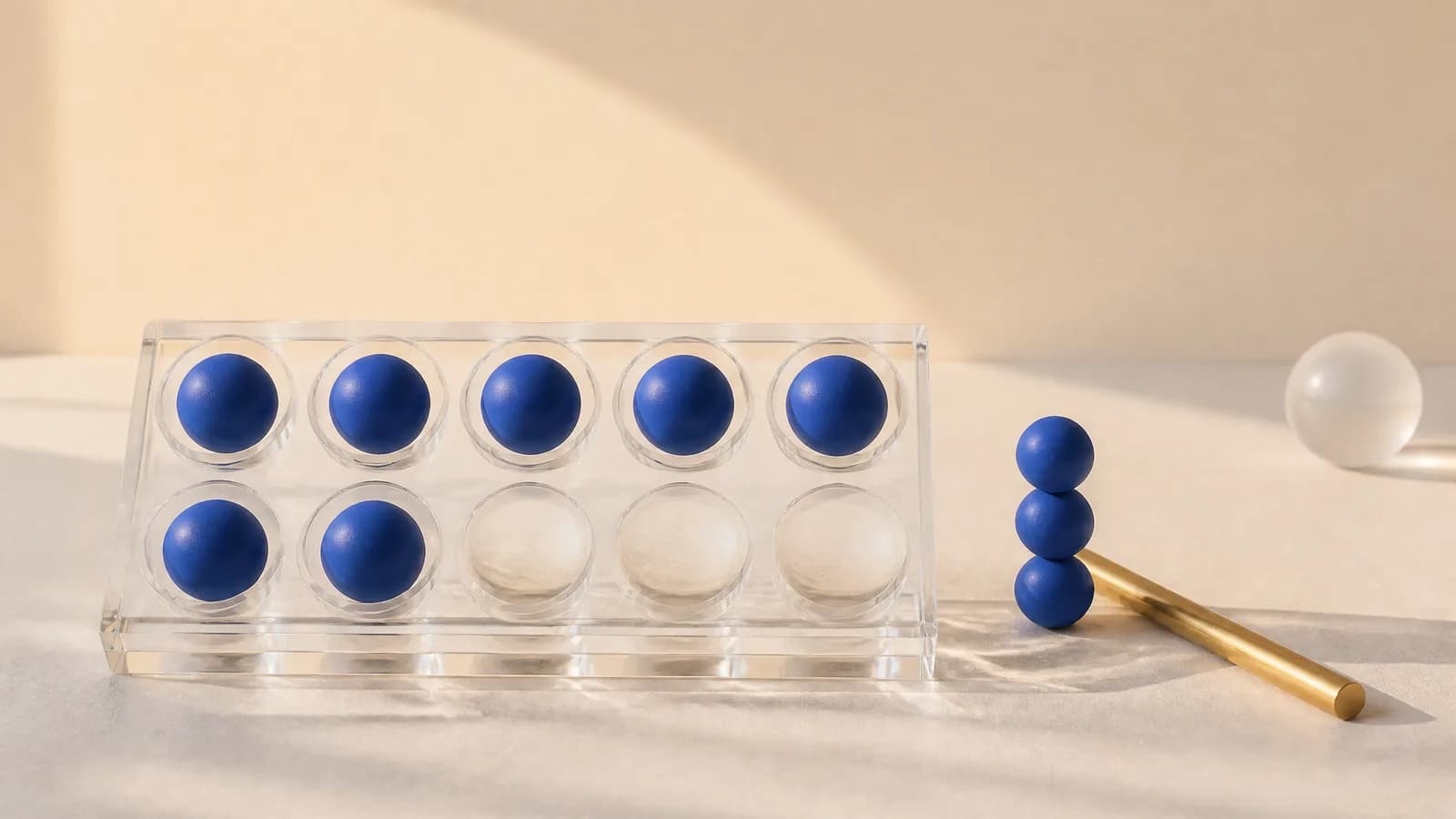
Junior Mathematics: arithmetic and geometry foundations
The classic word problems (ratio, percentage, speed, mixtures) and the geometry every later course needs: angles, triangles, Pythagoras, polygons, circles, area and volume, learned by doing puzzles.
 Course
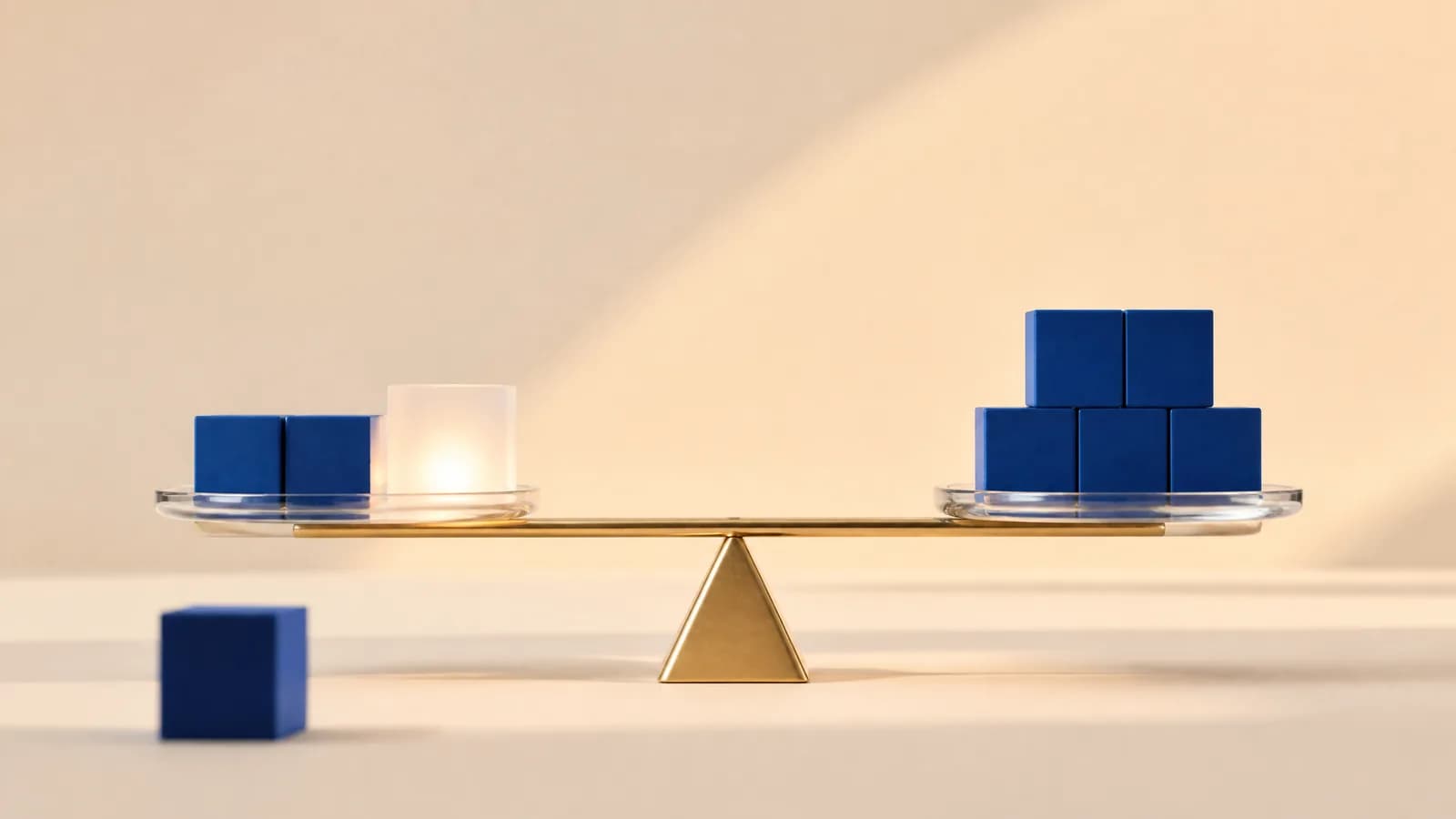
Junior Algebra: the bridge to O-level
Algebra your child can see before they see a letter. A balance weighs an unknown, a machine hides a rule, and every idea starts as something you can move, not a line of symbols.
 Course
Cambridge A Level Further Mathematics: Further Pure 1 (9231 Paper 1)
Paper 1 of 9231, Further Pure Mathematics 1. Written so far: topic 1.1, roots of polynomial equations, taught step by step from quadratics to quartics, with practice, exam questions and a summary.
 Course
O Level Physics: Waves, Light and Sound (5054)
The whole of 5054 section 3, taught step by step: waves, reflection and refraction, lenses and ray diagrams, the electromagnetic spectrum and sound, with worked examples, practice and exam questions in every chapter.
 Course
O Level Physics: Practical Skills for Paper 3 or 4 (5054)
The experimental skills worth 20% of 5054: apparatus, measurements, planning, tables, graphs, conclusions, errors and improvements.
 Course
O Level Physics: Nuclear and Space Physics (5054)
5054 sections 5 and 6: atomic structure, radioactivity, half-life, radiation safety, the Solar System, stars and the expanding Universe.
 Course
O Level Physics: Mechanics, Thermal Physics and Momentum (5054)
5054 sections 1 and 2: measurement, motion, forces, momentum, energy, pressure and thermal physics taught through models you can move.
 Course
O Level Physics: Electricity and Magnetism (5054)
The whole of 5054 section 4, from magnets and charge to circuits, safe mains electricity, motors, induction, transformers and the oscilloscope.
 Course
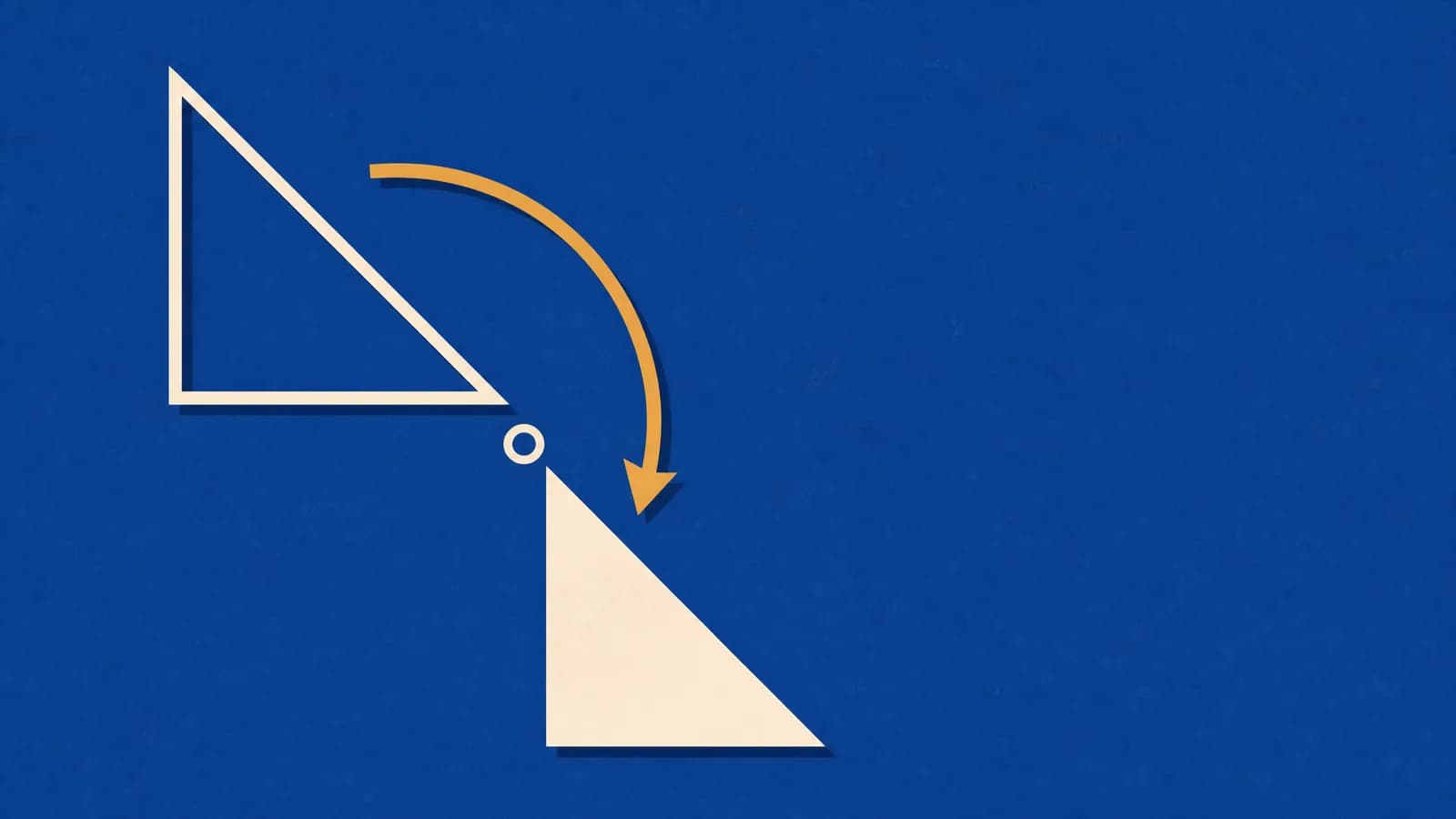
Cambridge O Level Mathematics: Trigonometry (4024)
Section 6 in the syllabus order, taught step by step: Pythagoras' theorem, sine, cosine and tangent in right-angled triangles, the sine and cosine rules with the area formula, and problems in 3D.
 Course
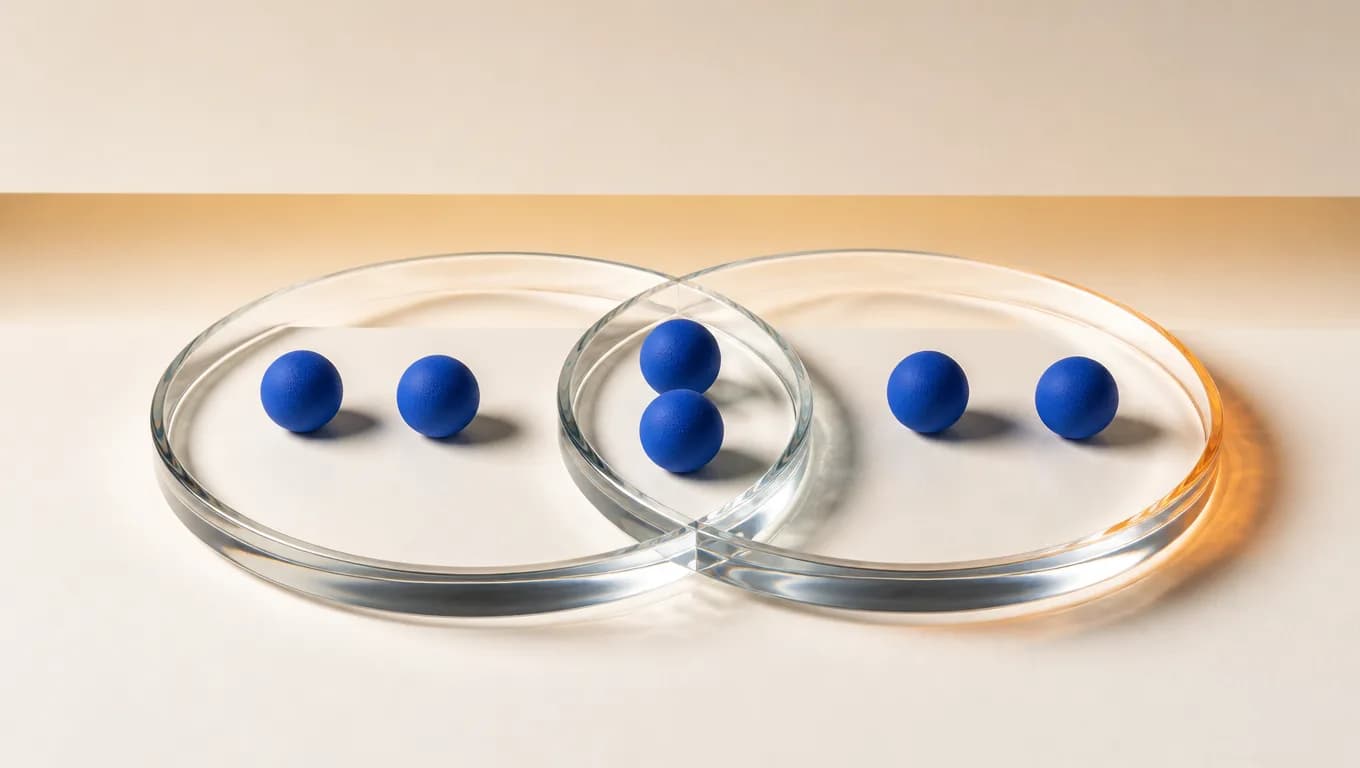
Cambridge O Level Mathematics: Transformations and Vectors (4024)
Section 7 in the syllabus order: reflection, rotation, enlargement and translation, then column vectors, magnitude and vector geometry proofs.
 Course
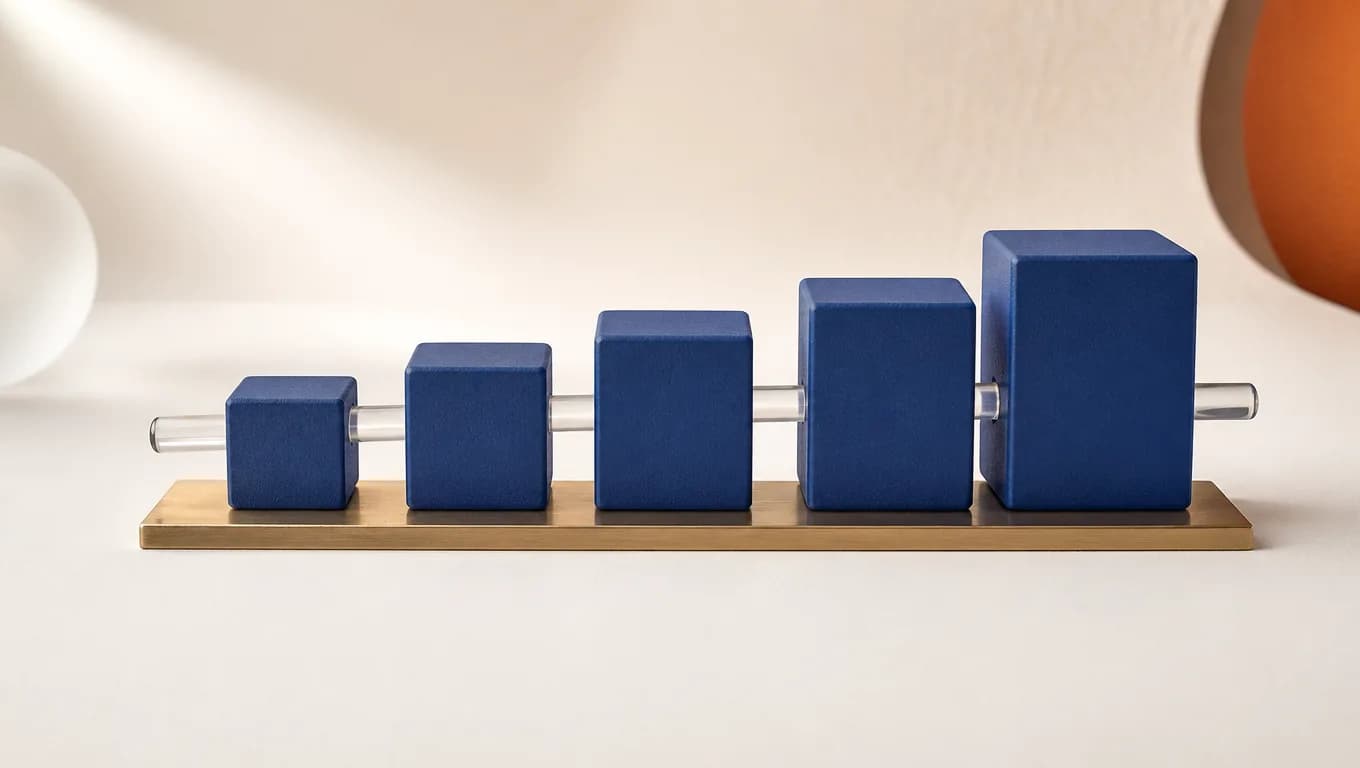
Cambridge O Level Mathematics: Sets, Probability and Statistics (4024)
Sets and Venn diagrams, then every statistics topic in section 9 from tally charts to histograms, then probability from a single event to tree diagrams without replacement. Each chapter ends with practice, exam questions and a summary.
 Course
Cambridge O Level Mathematics: Number (4024)
Section 1 of 4024 in the syllabus order: types of number, powers and roots, fractions, ordering, the four operations, indices, standard form, estimation, bounds, ratio, rates, percentages, the calculator, time, money, growth and surds.
 Course
Cambridge O Level Mathematics: Graphs and Coordinate Geometry (4024)
Straight-line graphs and coordinate geometry, travel and speed-time graphs, graphs of functions, sketching curves and functions, taught step by step for Cambridge O Level Mathematics.
 Course
Cambridge O Level Mathematics: Geometry and Mensuration (4024)
Sections 4 and 5 of 4024 in plain steps: geometry words, constructions and nets, angle facts with reasons, symmetry, bearings, similarity, the circle theorems, then units, areas, circles, and the surface area and volume of solids.
 Course
Cambridge O Level Mathematics: Algebra (4024)
The whole 4024 algebra section from the first letter: expressions and substitution, expanding and factorising, algebraic fractions, indices, every kind of equation, inequalities, sequences and proportion.
 Course
O Level Chemistry: Reactions, Redox and the Periodic Table (5070)
5070 topics 4 to 8. The foundation module says what a substance is; this one uses electron transfer, energy, collision and periodic rules to predict what it does.
 Course
O Level Chemistry: Practical Skills and Analysis (5070)
5070 topic 12 and the Paper 3 or Paper 4 skills, taught step by step: apparatus, planning, tables and graphs, titration, chromatography, separation, and tests for ions and gases.
 Course
O Level Chemistry: Organic Chemistry (5070)
The whole of 5070 section 11, taught with things from home: formulae and naming, fuels, alkanes, alkenes, alcohols, carboxylic acids, esters and polymers.
 Course
O Level Chemistry: Metals, Environment and Industry (5070)
5070 topics 9 and 10 taught step by step: properties and uses of metals, alloys, the reactivity series, rusting, extraction of iron and aluminium, water, fertilisers, air quality and climate.
 Course
O Level Chemistry: Matter, Bonding and the Mole (5070)
5070 topics 1 to 3, organised as four connected learning blocks. Matter is particles; structure explains properties; formulae and the mole make particles measurable.
 Course
O Level Additional Mathematics: Trigonometry, Series and Vectors (4037)
Radians, the six trigonometric functions and their graphs, equations and identities, permutations and combinations, the binomial theorem, progressions and vectors for 4037.
 Course
O Level Additional Mathematics: Logs and Coordinate Geometry (4037)
Logarithmic and exponential functions, straight-line graphs and the coordinate geometry of the circle for Cambridge O Level Additional Mathematics 4037, taught step by step with worked examples, practice and exam questions.
 Course
O Level Additional Mathematics: Functions and Quadratics (4037)
Functions, composite and inverse functions, modulus graphs, and quadratic functions from solving to the discriminant, for Cambridge O Level Additional Mathematics 4037.
 Course
O Level Additional Mathematics: Exam Mastery (4037)
Original Paper 1 and Paper 2 mini-mocks with mark-aware self-checking, error diagnosis and changed transfer questions.
 Course
O Level Additional Mathematics: Calculus (4037)
Differentiation, its applications, integration, area and kinematics for Cambridge O Level Additional Mathematics 4037, taught step by step from the gradient of a curve.
 Course
O Level Additional Mathematics: Polynomials and Equations (4037)
Simultaneous equations, factors of polynomials, modulus equations and inequalities, cubic graphs and substitution for Additional Mathematics 4037.
 Course
Primary Mathematics: foundations
Primary maths you do, not maths you read. Every lesson gives your child something to move, a guess to make first, and one idea to keep. Built for English-medium students aged 9 to 11.
 Course
AS Physics: Practical Skills & Paper 3 Mastery (9702)
Complete Cambridge 9702 Paper 3 laboratory preparation: micrometer and vernier metrology, zero error calibration, uncertainty propagation, graph plotting with the 50% grid rule, and the 4-mark evaluation matrix.
 Course
AS Physics: Measurement and Motion (9702)
9702 topics 1 and 2. Units, uncertainty and vectors, then motion read off a graph: the two topics every later paper quietly assumes you already own.
 Course
AS Physics: Matter and Waves (9702)
9702 topics 6, 7 and 8. Stress, strain and the Young modulus, then waves: every interference pattern in the syllabus is superposition applied twice.
 Course
AS Physics: Forces and Energy (9702)
9702 topics 3, 4 and 5. Newton’s laws, free-body diagrams and moments, then the two conserved quantities that answer a question without tracking every force.
 Course
AS Physics: Electricity and the Atom (9702)
9702 topics 9, 10 and 11. Current as counted carriers, then circuits, then what the carrier is made of: the quark model as an answer, not a table to memorise.
 Course
A2 Physics: Thermal Physics (9702)
9702 topics 14, 15 and 16. Temperature is not heat, and the difference is most of the marks: both come from the random motion of molecules, and this module makes that quantitative.
 Course
A2 Physics: Quantum and Nuclear Physics (9702)
9702 topics 22 and 23. Some things only come in whole amounts: one photon, one quantized atomic energy level, one decaying nucleus. The foundational quantum core of modern physics.
 Course
A2 Physics: Planning, Analysis & Paper 5 Mastery (9702)
Dedicated preparation for Cambridge 9702 Paper 5: 15-mark experimental planning, logarithmic linearisations, error bar plotting, best-fit and worst acceptable lines, gradient/intercept uncertainties, and significant figure rules.
 Course
A2 Physics: Circular Motion, Gravitation and Oscillations (9702)
9702 topics 12, 13 and 17. A ball on a string, a planet in orbit and a mass on a spring turn out to be one problem: an acceleration that always points at a centre.
 Course
A2 Physics: Medical Physics, Astronomy and Cosmology (9702)
9702 topics 24 and 25. Medical diagnostic technologies (ultrasound reflection, X-ray attenuation, CT reconstruction, PET annihilation) and astronomical cosmology (standard candles, Stefan-Boltzmann, Wien, Hubble expansion and the Big Bang).
 Course
A2 Physics: Electric Fields, Capacitance, Magnetism and A.C. (9702)
9702 topics 18 to 21. A field is what one charge leaves behind for another to find. Strength adds as arrows and potential adds as numbers, and most of the marks live in that difference.
 Course
Cambridge A Level Mathematics: Probability & Statistics 1 (9709 Paper 5)
Paper 5 of 9709 from the ground up: data diagrams, averages and spread, probability, permutations and combinations, discrete, binomial and geometric distributions, and the normal distribution.
 Course
Cambridge A Level Mathematics: Pure 3 (9709 Paper 3)
Paper 3 of 9709, the pure paper the full A Level adds: algebra, logarithms, trigonometry, calculus with every function, numerical methods, vectors in three dimensions, differential equations and complex numbers.
 Course
Cambridge A Level Mathematics: Pure 1 (9709 Paper 1)
Paper 1 of 9709, the paper every AS and A Level candidate sits: quadratics, functions, coordinate geometry, circular measure, trigonometry, series, differentiation and integration, taught step by step with models you can move.
 Course
AS Chemistry: Structure, Bonding and the Mole (9701)
9701 topics 1 to 4, the half of AS chemistry where nothing reacts yet: what a substance is made of, and how much of it you have. Electrons decide the first, the mole counts the second.
 Course
AS Chemistry: Practical Skills and Paper 3 (9701)
The paper where knowing the chemistry is not enough. Choose the apparatus the method asks for, read it to the right place, and say which measurement limits your answer.
 Course
AS Chemistry: Organic Synthesis and Evidence (9701)
Prove which compound you have before you name it: the carbonyl that two families share, the tests that separate them, and the reactions that build one functional group from another.
CourseAS Chemistry: Organic Patterns and Reactions (9701)
Read a molecule before you react it: formula languages, orbital hybridisation and shape, structural and cis-trans isomerism, and chirality in three dimensions.
CourseAS Chemistry: Periodic Patterns and Industrial Chemistry (9701)
9701 topics 9, 10, 11 and 12: Period 3 physical and chemical trends, Group 2 alkaline earth metals, Group 17 halogens, and the chemistry of nitrogen and sulfur.
 Course
AS Chemistry: Energetics, Redox, Equilibria and Kinetics (9701)
9701 topics 5 to 8, the four questions you can ask about one reaction: does it give energy out, will it go at all, how far does it go, and how fast.
 Course
A2 Chemistry: Transition Elements (9701)
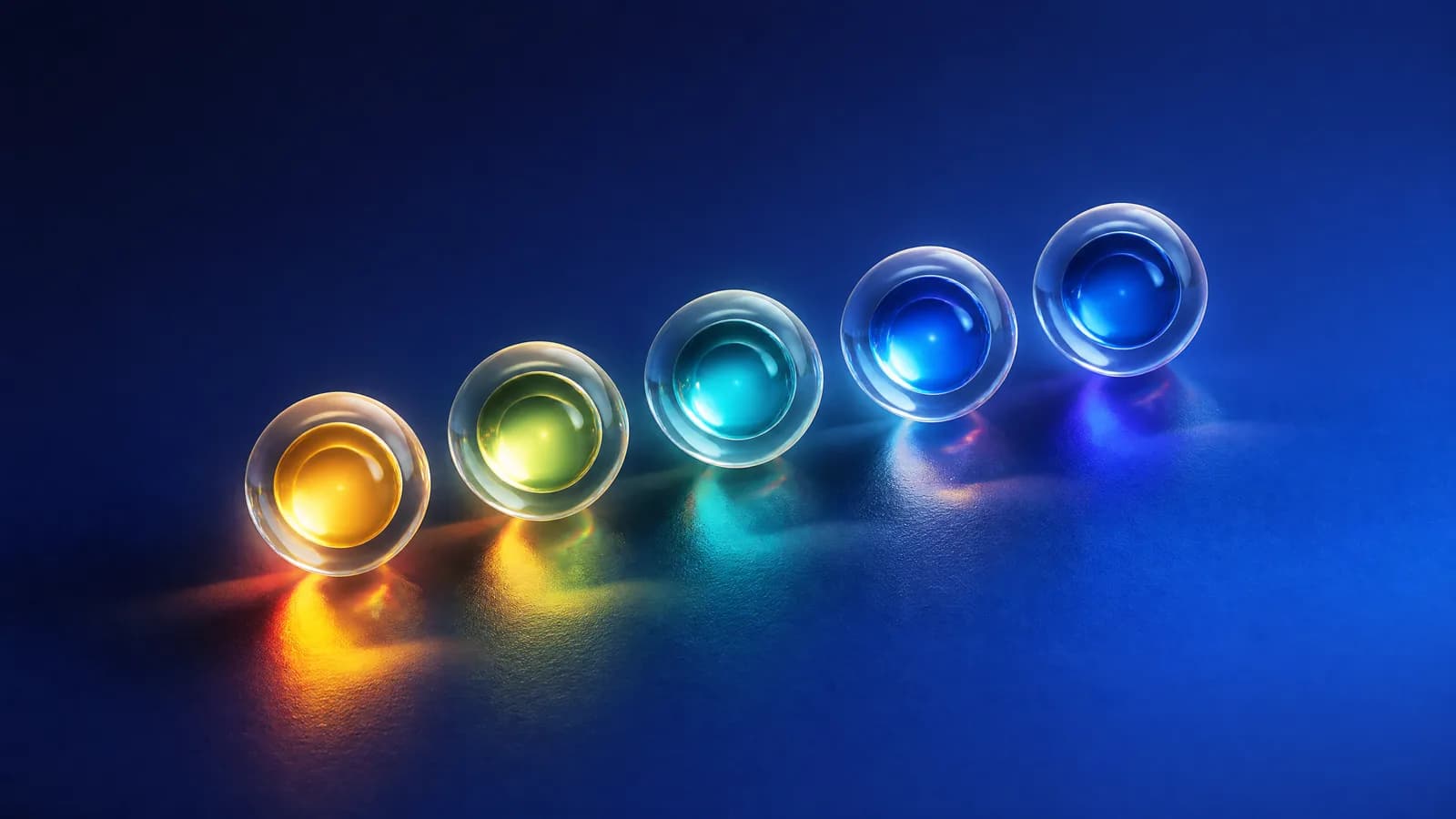
One incomplete d subshell, and everything else follows from it. Find the second isomer on a square and fail to find it on a tetrahedron, then find out that a solution is the colour it does not absorb.
 Course
A2 Chemistry: Planning, Analysis and Evaluation (9701)
Paper 5 is one skill in many costumes: plan on paper, straighten the law, take the gradient, and find the measurement that was limiting the result all along.
 Course
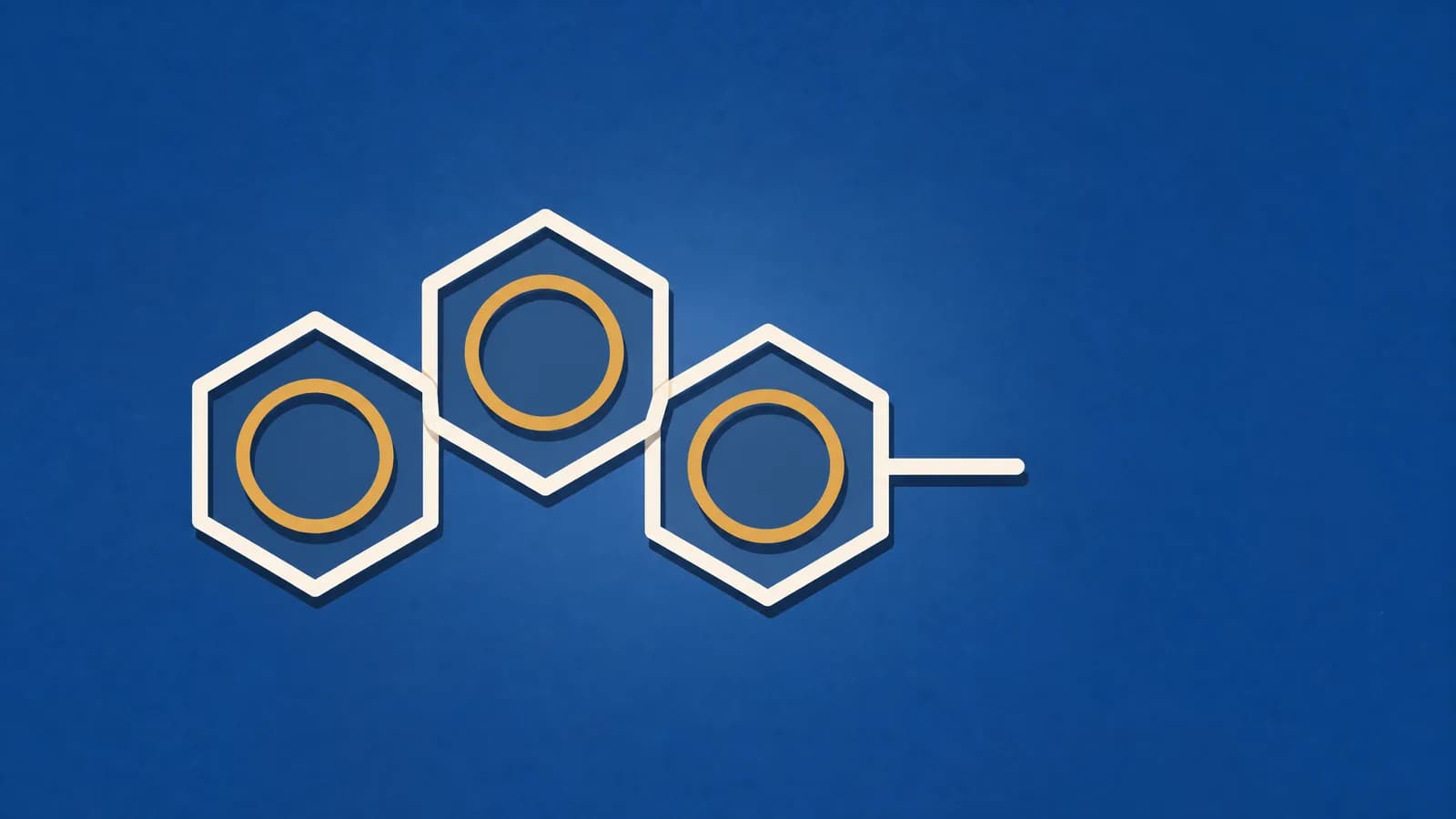
A2 Chemistry: Organic Architecture (9701)
The A2 organic spine, starting where the evidence starts: two structures for benzene, the measurements that choose between them, and everything that follows from 152 kJ per mole of delocalisation energy.